MediSave for Integrated Shield Plan Premiums 2026: How Much Can You Really Use?
The Additional Withdrawal Limit (AWL) by age, what counts as cash-only, and how the April 2026 rider reforms change the maths.
MediSave can pay for your MediShield Life premium in full, but the private insurance portion of your Integrated Shield Plan is capped by an Additional Withdrawal Limit (AWL) of $300 to $900 a year, depending on your age. Anything above that cap, your insurer bills you in cash. Here’s exactly how the numbers work in 2026.
Not financial advice. All figures are for educational reference only. Data verified as at 5 August 2026 against CPF Board and Ministry of Health sources.
- MediShield Life premiums are fully payable with MediSave — no cap
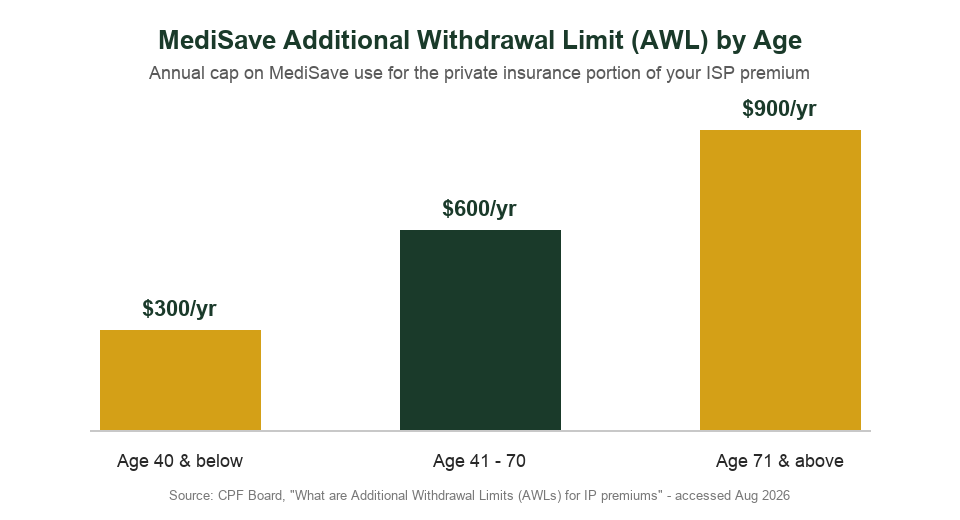
- Your Integrated Shield Plan’s private component is capped by the AWL: $300 (age 40 and below), $600 (41-70), or $900 (71 and above) per year
- Anything above the AWL comes out of your own pocket in cash, so budget for it — especially after the April 2026 rider reforms
Table of Contents
Contents - Click to expand
Why MediSave Doesn’t Cover Everything
Many Singaporeans assume MediSave quietly pays their whole Integrated Shield Plan (IP) premium each year. It doesn’t. Your IP premium is really two premiums bundled together: the government MediShield Life (MSL) layer, and a private insurance layer sold by insurers like AIA, Great Eastern, Prudential, NTUC Income, and Singlife.
The MSL layer can be paid in full with MediSave. The private layer is where things get capped. That cap is called the Additional Withdrawal Limit, or AWL.
This distinction matters more in 2026 than it used to. Medical inflation has pushed rider and plan premiums up for several years running, and MOH introduced new rider rules from 1 April 2026 to slow that growth. If you don’t understand where the AWL kicks in, you can be caught off guard by a cash bill you didn’t budget for.
How MediSave Actually Pays for Your ISP Premium
Here’s the mechanic, straight from CPF Board’s own explanation. Your IP premium has two components:
1. The MediShield Life component. This is fully payable using MediSave. There’s no separate cap on this portion — it’s the baseline coverage every Singapore Citizen and Permanent Resident already has.
2. The private insurance component. This is the extra coverage your IP insurer adds on top — for a Class A ward, a private hospital, or a specific rider. This portion is subject to the AWL. Once you hit the AWL for the year, your insurer collects the rest of that premium from you in cash, not MediSave.
According to CPF Board, the AWL exists to strike a balance: it lets you use MediSave for higher private coverage, while preserving your MediSave balance for actual hospital bills later in life.
MediSave AWL by Age in 2026
The AWL isn’t one flat number. It rises as you get older, since older policyholders typically carry higher premiums and have built up more MediSave savings over their working years.
| Age Next Birthday | Annual AWL | What It Means for You |
|---|---|---|
| 1 – 40 | $300/year | MediSave covers up to $300 of your private IP component; the rest is cash |
| 41 – 70 | $600/year | Double the younger tier’s limit, reflecting typically higher premiums at this age |
| 71 and above | $900/year | Highest tier, but private component premiums at this age can still exceed it by a wide margin |
Source: CPF Board, “What are Additional Withdrawal Limits (AWLs) for Integrated Shield Plan (IP) premiums?” — accessed 5 August 2026.
What Changed for ISP Riders From April 2026
MOH’s rider reform took effect on 1 April 2026, and it changes the cash-vs-MediSave equation for many policyholders. Two changes matter most.
Riders no longer cover the deductible. New riders sold from 1 April 2026 can’t cover your Integrated Shield Plan’s minimum deductible. Previously, some riders covered close to 100% of your bill, deductible included. Now you’ll carry more of the deductible yourself.
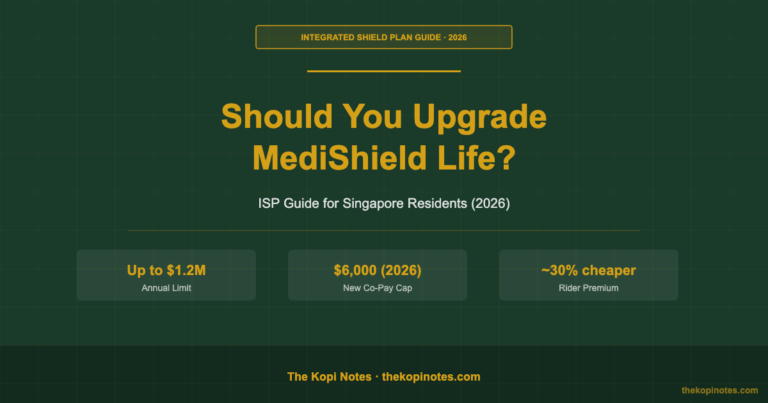
The co-payment cap went up. The minimum co-payment cap for new riders rose to $6,000, up from the previous minimum, to better match how much hospital bills have grown over time.
The upside: MOH and insurers report that new riders are roughly 30% cheaper on average than the old maximum-coverage riders they replace. A smaller premium means the AWL stretches further, and you’re less likely to hit the cash-payment zone in the first place. But you’re also taking on more out-of-pocket risk if you’re hospitalised, so it’s a genuine trade-off, not a free win.
If you bought your rider before 1 April 2026, check with your insurer on when — or whether — you’ll transition to a new-format rider. Our explainer on the new ISP rider rules walks through the transition timeline in more detail.
Why Your Basic Healthcare Sum Also Matters
The AWL caps how much you can use per year for the private component. Your Basic Healthcare Sum (BHS) is a separate number: the ceiling on how much can sit in your MediSave Account before extra contributions spill over into your Ordinary or Special Account.
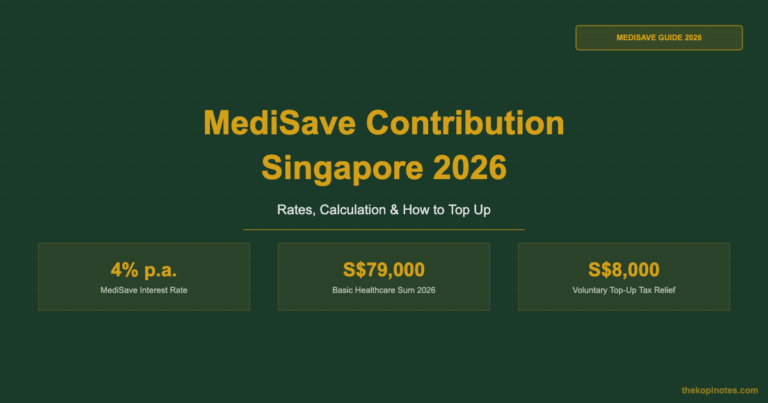
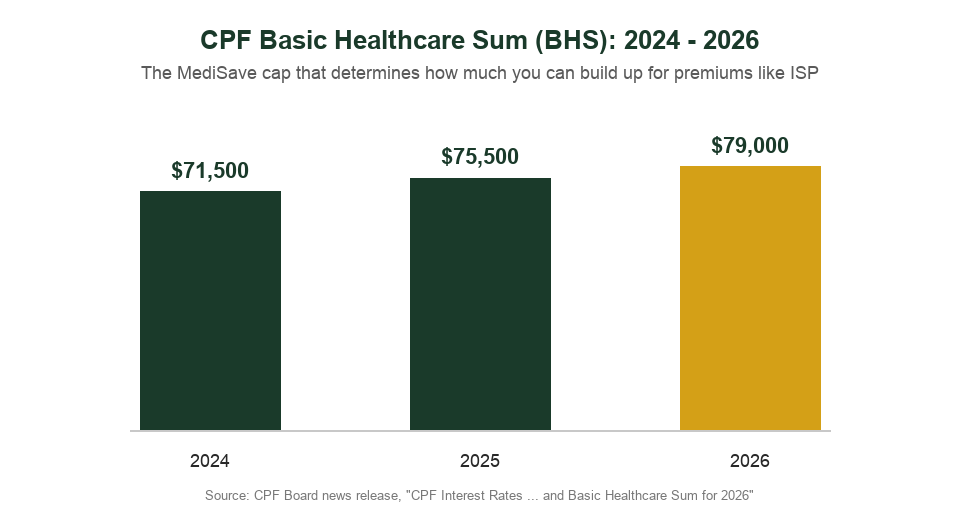
The BHS has climbed every year — from $71,500 in 2024, to $75,500 in 2025, to $79,000 in 2026. A higher BHS means more room to build up MediSave savings for future premiums, deductibles, and co-payments, on top of the AWL you use each year for your IP premium itself.
| Year | Basic Healthcare Sum (BHS) | Year-on-Year Change |
|---|---|---|
| 2024 | $71,500 | – |
| 2025 | $75,500 | +5.6% |
| 2026 | $79,000 | +4.6% |
Source: CPF Board news release, “CPF Interest Rates from 1 January to 31 March 2026 and Basic Healthcare Sum for 2026.”
Source: CPF Board news release, “CPF Interest Rates from 1 January to 31 March 2026 and Basic Healthcare Sum for 2026.”
Example: When Your Premium Exceeds the AWL
Here’s an illustrative example to show how the AWL plays out (figures below are for illustration only — your actual premium depends on your insurer, plan, and rider).
Say you’re 45 years old with a private hospital IP plan and rider. Your MSL component is fully paid by MediSave — no limit there. Your private component premium, illustratively $850 a year, is subject to your AWL of $600 (since you’re in the 41-70 band). MediSave covers $600. You pay the remaining $250 in cash.
Now compare that to someone aged 71 with the same $850 premium. Their AWL is $900 — higher than the premium — so MediSave covers the full private component, with $50 of headroom to spare. The AWL tiers are designed so cash exposure is usually lower for older policyholders, even though their premiums are typically higher too.
What You Should Do Next
A few practical steps, whatever stage you’re at:
Check your age band. Know whether you’re in the $300, $600, or $900 AWL tier, and compare that against your actual private component premium — not your total IP premium.
Budget for the cash gap. If your private component premium regularly exceeds your AWL, set aside cash for it each year rather than being surprised at renewal.
Review your rider if you bought it before April 2026. Understand when your rider transitions to the new format, and how that changes your deductible and co-payment exposure. Our Integrated Shield Plan comparison guide is a good starting point if you’re weighing a switch.
Understand your total MediSave picture. The AWL is one small slice of what MediSave can do. Our complete MediSave guide and MediSave limit 2026 guide cover the Basic Healthcare Sum, withdrawal caps, and top-up strategies in full.
Plan retirement healthcare costs together with the rest of your finances. A Singapore retirement planning calculator can help you see how rising IP premiums fit into your broader retirement number, and our CPF investment strategy guide covers how to think about MediSave alongside your Ordinary and Special Accounts.
Frequently Asked Questions
Can MediSave pay for my full Integrated Shield Plan premium?
Not always. The MediShield Life portion of your premium is fully payable with MediSave. The private insurance portion — the extra coverage on top of MediShield Life — is capped by the Additional Withdrawal Limit (AWL), which is $300 to $900 a year depending on your age. Any amount above the AWL is billed to you in cash.
What is the MediSave Additional Withdrawal Limit (AWL) in 2026?
The AWL is $300 a year if you’re 40 or below, $600 a year if you’re 41 to 70, and $900 a year if you’re 71 or above. It applies only to the private insurance component of your Integrated Shield Plan premium, not the MediShield Life component.
Did the April 2026 rider reforms change the AWL?
The AWL itself hasn’t changed. What changed is how riders are designed: new riders sold from 1 April 2026 no longer cover the minimum deductible, and the minimum co-payment cap rose to $6,000. New riders are also around 30% cheaper on average, which can reduce how often you hit your AWL in the first place.
Can I use my family member's MediSave to pay for my ISP premium?
In some cases, yes. CPF allows immediate family members to use their own MediSave to help pay for your MediShield Life and Integrated Shield Plan premiums, subject to their consent and CPF’s rules on family MediSave use. Check directly with CPF Board or your insurer to confirm eligibility for your situation.
What happens if my ISP premium exceeds the AWL?
Your insurer will collect the portion of your private insurance component premium that exceeds your AWL directly from you in cash — it won’t be deducted from MediSave. This is separate from your MediShield Life premium, which remains fully MediSave-payable regardless of the AWL.
Is the MediSave Basic Healthcare Sum the same as the AWL?
No, they’re different limits. The Basic Healthcare Sum (BHS) — $79,000 in 2026 — is the ceiling on how much you can hold in your MediSave Account before extra CPF contributions flow into your Ordinary or Special Account instead. The AWL is a separate annual cap specifically on how much MediSave you can use for the private component of your Integrated Shield Plan premium.
Plan Your MediSave and ISP Premiums With Confidence
Understand your full MediSave picture before your next ISP renewal — read the guides below.
Get Free Insurance Advice
Speak with a licensed insurance advisor. No obligation, no cost.
By submitting this form, you agree to our Privacy Policy.
This article was researched with the help of AI. While we strive to keep all information accurate and up to date, there may be errors. If you notice any discrepancies, please contact us.