Endowment Plan Singapore 2026: Should You Lock In Before the September Rate Cut?
With the Fed meeting on 17-18 September 2026, here is what falling rates mean for your endowment plan decision.
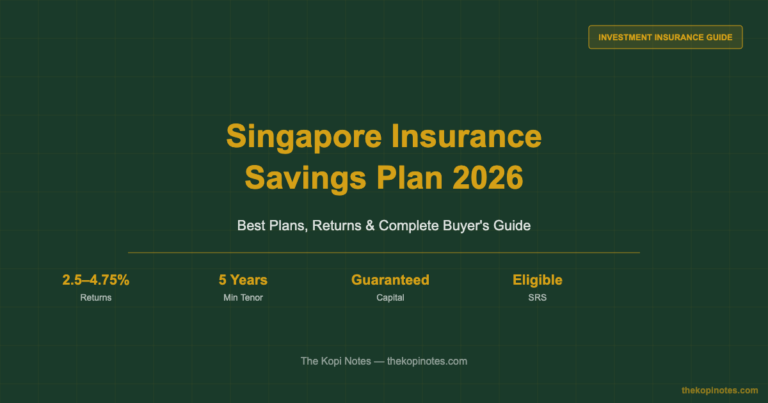
A Singapore endowment plan is a savings-with-insurance product that guarantees your capital at maturity plus a fixed yield. With the US Federal Reserve meeting on 17-18 September 2026 and a rate cut expected, new endowment tranche yields are likely to fall within one to three months. If current rates of 1.44% to 3.38% p.a. suit your goals, acting before the rate cut may let you lock them in for the full term.
Not financial advice. All figures are for educational reference only. Rates are indicative and vary by tranche. Always verify with the insurer before purchasing. Data verified as at 11 September 2026.
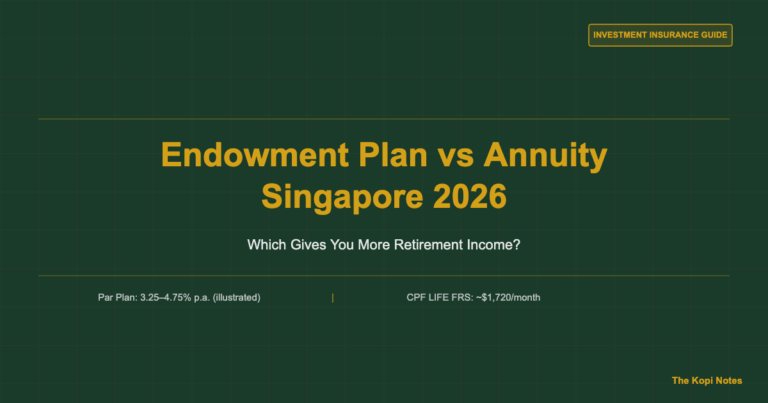
- Short-to-medium term endowment plans in Singapore currently offer guaranteed yields of 1.44% to 3.38% p.a., depending on insurer and plan term.
- The Fed is expected to cut rates on 17-18 September 2026. Singapore endowment insurers typically adjust new tranche yields within one to three months of a rate move.
- If you lock in before a new lower-rate tranche opens, your yield is fixed for the full term. But compare carefully with T-bills and Singapore Savings Bonds first.
What Is an Endowment Plan in Singapore?
An endowment plan is a savings-with-insurance product sold by life insurers in Singapore. You pay a lump sum or regular premiums. At the end of the plan term, the insurer returns your capital plus a guaranteed yield.
There are two broad types. Single premium plans are the most common for short-term savers. You put in a lump sum for a fixed term of two to three years. Returns are fully guaranteed if you hold to maturity. Regular premium plans require monthly or annual contributions over a longer term of five to twenty-five years. These include a non-guaranteed bonus element.
This article focuses on single premium, short-to-medium term plans. These are the plans most directly affected by rate changes.
Endowment plans in Singapore are regulated by the Monetary Authority of Singapore (MAS). They are not protected by SDIC. However, they come with a life insurance element, so policyholders benefit from industry safety-net arrangements.
How the September 2026 Rate Cut Affects Endowment Plans
The Fed meets on 17-18 September 2026. Markets widely expect at least one 25 basis point cut. Here is the transmission chain to Singapore endowment plans.
Insurers invest your premiums in Singapore Government Securities, MAS bills, and investment-grade bonds. When US rates fall, Singapore sovereign yields tend to follow. That feeds through to lower endowment tranche yields over time.
| Product | Speed of Rate Adjustment |
|---|---|
| T-bills | Within days of a Fed cut |
| Fixed deposits | Weeks 1-4 |
| Singapore Savings Bonds | Each monthly issuance (1-4 weeks) |
| Endowment plan new tranches | 1-6 months after a rate cycle begins |
Source: general market observation; individual insurer timelines vary.
This lag is your potential advantage. If you commit to an endowment tranche before insurers open new lower-rate tranches, your yield is locked in for the full two to three years.
That said, a single 25bps cut rarely causes an immediate repricing. Full endowment yield compression typically follows a sustained rate-cut cycle. Do not rush into a plan that does not suit your goals simply because of rate-cut timing.
Current Endowment Plan Rates: September 2026
Here are indicative guaranteed yields from major Singapore endowment plans as at September 2026. Rates are tranche-specific and change when each tranche closes.
| Plan | Insurer | Term | Guaranteed Yield p.a. |
|---|---|---|---|
| Manulife Goal 2026 | Manulife | 2 yrs | 1.44% |
| AIA #Wealth Savvy (no longer available — was offered on a tranche basis) | AIA | 2-3 yrs | 2.80%-3.38% |
| Gro Capital Ease | NTUC Income | 2-3 yrs | ~3.38% (historical) |
| Etiqa EasyGrow | Etiqa | 2-3 yrs | Market-linked tranche |
Source: insurer product pages and indicative tranche data, September 2026. Always confirm current tranche before purchasing.
The spread between plans is wide. A 3.38% p.a. plan over two years on S$50,000 returns roughly S$3,380 in guaranteed interest. A 1.44% plan returns about S$1,440. The difference is meaningful on a large lump sum.
Endowment Plans vs Alternatives in September 2026
Before you commit, compare endowment plans against other Singapore savings options. The best choice depends on your time horizon and how much liquidity you need.
| Product | Indicative Yield | Liquidity | Capital Guaranteed |
|---|---|---|---|
| Endowment plan (2-3 yr) | 1.44%-3.38% p.a. | Low (early surrender penalty) | Yes (at maturity) |
| Singapore T-bills | ~3.0%-3.7% | High (6-month term) | Yes |
| Singapore Savings Bonds | ~2.5%-3.5% | Very high (redeem anytime) | Yes |
| Bank fixed deposit | ~2.5%-3.0% | Medium (break penalty varies) | Yes (SDIC up to S$100k) |
Source: MAS, SGS website, indicative bank offers, September 2026. All yields are indicative and subject to change.
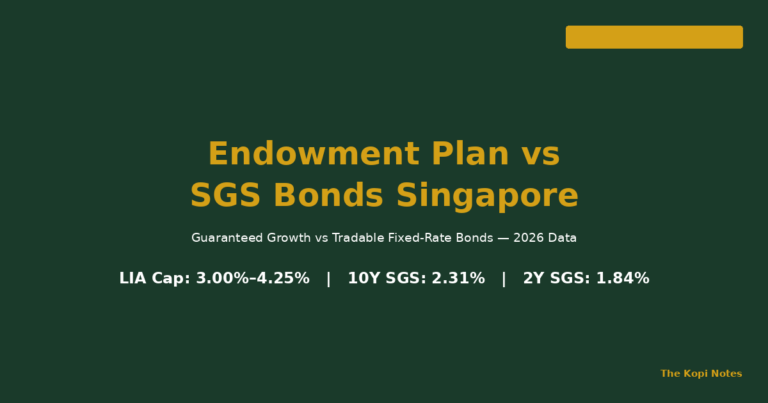
T-bills currently offer competitive yields with far greater liquidity. If the September rate cut materialises, T-bill yields at the next auction will likely fall. That is the window where endowment plans become relatively more attractive on a locked-in basis.
Singapore Savings Bonds remain the most flexible option. You can redeem them any month. The tradeoff is that SSB yields also fall with each new monthly issuance after a rate cut.
Should You Lock In an Endowment Plan Before the Rate Cut?
This depends on three factors: your time horizon, your need for liquidity, and the yield spread between endowment plans and alternatives.
Lock in if: You have a lump sum you will not need for two to three years. You want a guaranteed return without managing rollovers. The plan you are considering offers a meaningfully higher yield than current SSBs or T-bills. You are comfortable with the early surrender penalty if life changes.
Wait or choose alternatives if: You may need the funds before the plan matures. You are happy rolling T-bills every six months and monitoring rates. You prefer the full flexibility of SSBs. You want to use CPF funds, which have their own guaranteed rates.
For retirement planning, endowment plans can serve as a capital-preservation layer. They work well alongside CPF investment strategy and passive income sources in Singapore.
For pure yield maximisation with flexibility, T-bills and SSBs remain hard to beat in the current Singapore environment.
How to Buy an Endowment Plan in Singapore
You can buy endowment plans through four main channels.
Directly from the insurer is the most common route. Manulife, AIA, and NTUC Income all have online application portals for their short-term savings plans. You complete a simple health declaration and fund the plan via PayNow or FAST.
Through a financial advisory firm is useful if you want to compare plans across multiple insurers. An adviser can access tranche data that may not be publicly listed. MAS-licensed advisers are listed on the MAS Register of Financial Service Providers.
Through digital wealth platforms like Endowus and Syfe, which sometimes distribute selected insurance savings products alongside their fund offerings. Check availability on their platforms directly.
Through bank branches such as DBS, OCBC, and UOB, which distribute selected insurer plans. Existing bank clients may find this a convenient starting point.
Always check: the tranche yield and maturity date, the early surrender terms, the minimum sum, and whether the plan has any non-guaranteed components. Read the Product Summary and the Policy Illustration before committing.
Frequently Asked Questions
”What
”Is
”What
”Will
”Will
”Are
Disclaimer: This article is for educational purposes only and does not constitute financial advice. All yield figures are indicative, tranche-specific, and subject to change. Always verify current rates directly with the insurer and consult a licensed financial adviser before making any investment decision. The Kopi Notes may earn referral fees from linked platforms.
Get Free Insurance Advice
Speak with a licensed insurance advisor. No obligation, no cost.
By submitting this form, you agree to our Privacy Policy.
This article was researched with the help of AI. While we strive to keep all information accurate and up to date, there may be errors. If you notice any discrepancies, please contact us.