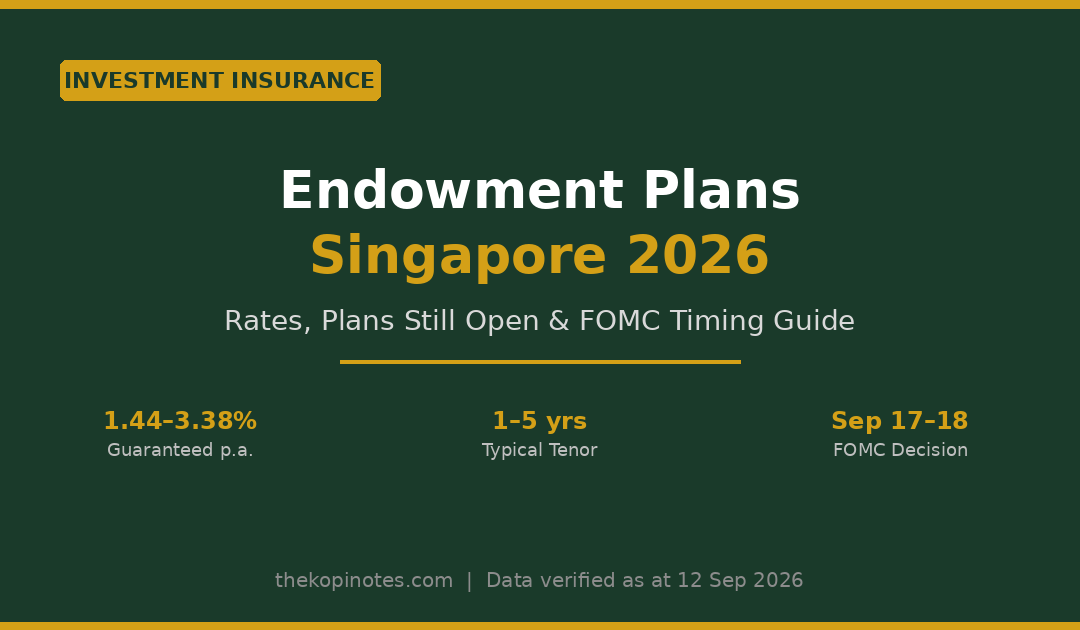
Endowment Plans Singapore 2026: Rates, Plans Still Open & What to Do Before September’s Rate Decision
Which Singapore endowment plans are still accepting applications, what guaranteed yields they offer right now, and how the Federal Reserve’s September 17–18 meeting affects your decision.
Singapore endowment plans are savings-cum-insurance products that pay a lump sum at the end of a fixed term, with a guaranteed minimum return. As of September 2026, guaranteed yields from open single-premium plans range from 1.44% to 3.00% per annum, with the Federal Reserve’s September 17–18 FOMC meeting likely to push these rates lower once it concludes.
Not financial advice. All figures are for educational reference only. Data verified as at 12 September 2026. Rates are tranche-specific and change when tranches close — always verify directly with the insurer before applying.
- AIA #Wealth Savvy offers 3.00% p.a. guaranteed over 3 years — the highest guaranteed rate from a major insurer with open applications in Sep 2026.
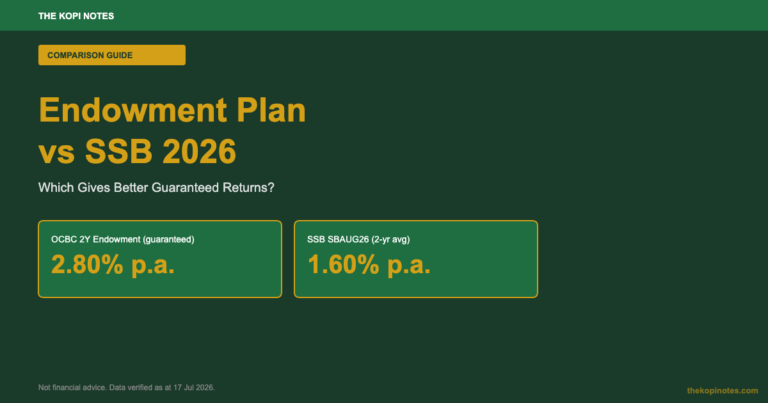
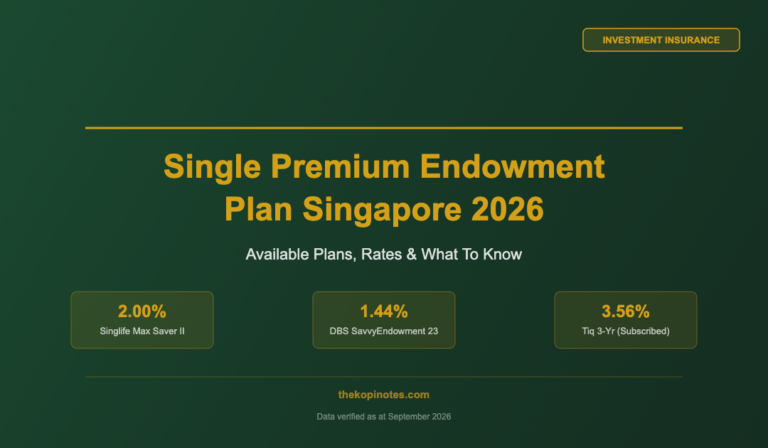
- Singlife Max Saver II offers 2.00% p.a. guaranteed for 2 years (min S$20,000).
- Manulife Goal 2026 offers 1.44% p.a. guaranteed for 2 years.
- NTUC Income Gro Capital Ease is currently between tranches; check for new tranche availability.
- If the Fed cuts rates on September 17–18, new endowment plan tranches post-FOMC will likely offer lower guaranteed yields.
What Is an Endowment Plan?
An endowment plan is a life insurance product that combines savings with basic life coverage. You pay premiums over a set term (or a single lump sum for single-premium plans), and the insurer pays you a guaranteed sum at maturity — plus any non-guaranteed bonuses, depending on the plan type.
Endowment plans are popular in Singapore for several reasons:
- Capital guaranteed on maturity — you receive at least the guaranteed sum if you hold to term.
- Predictable returns — non-participating plans lock in a guaranteed yield upfront.
- Basic life coverage — most plans include a death benefit of at least 101% of the guaranteed maturity value.
- SDIC-protected — eligible benefits are protected up to S$100,000 per policy owner per insurer under the Singapore Deposit Insurance Corporation.
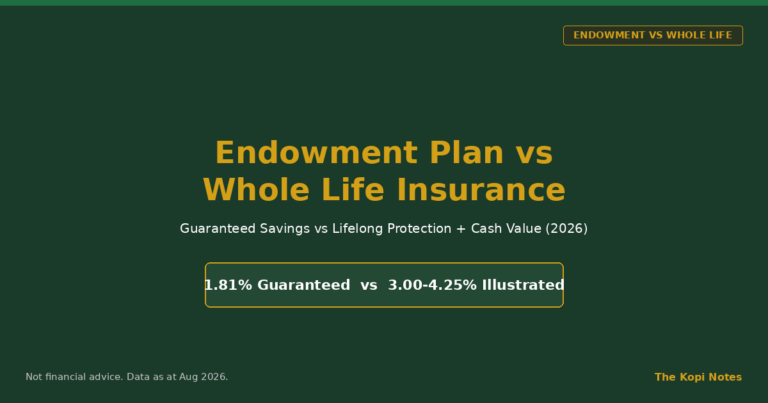
Endowment plans come in two main types: participating (par) and non-participating (non-par). Non-par plans have fully guaranteed returns. Par plans offer a lower guaranteed portion but participate in the insurer’s par fund, which may deliver higher illustrated (non-guaranteed) returns over the long term.
September 2026 Rate Snapshot
Here are the key endowment plans and their guaranteed yields as verified in September 2026. Rates change when tranches close — always confirm with the insurer before applying.
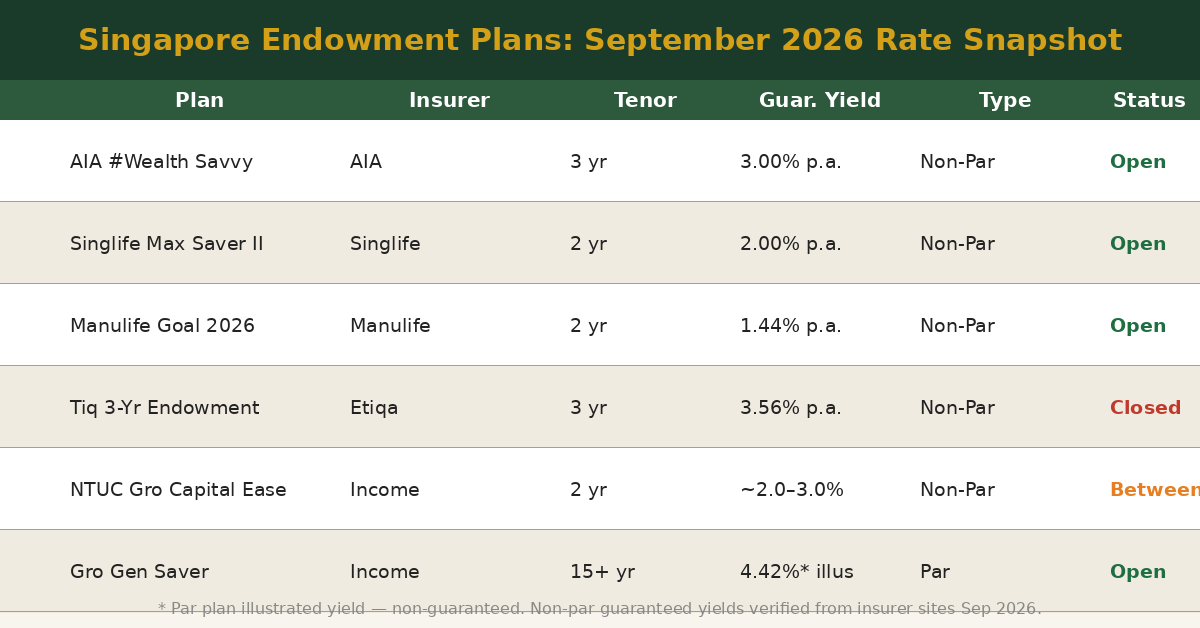
* Par plan illustrated yield is non-guaranteed and depends on the insurer’s par fund performance. Non-par guaranteed yields were verified from official insurer sites as at 12 Sep 2026.
Par vs Non-Par Endowment Plans: Which Is Right for You?
The single most important distinction in Singapore endowment plans is whether the plan is participating (par) or non-participating (non-par).
| Feature | Non-Par Plan | Par Plan |
|---|---|---|
| Guaranteed yield | Fully guaranteed (e.g. 1.44–3.00% p.a.) | Lower guaranteed portion |
| Non-guaranteed bonus | None — total return is the guaranteed yield | Yes — illustrated total yield may be 3–5% p.a. |
| Typical tenor | 1–3 years (short to medium) | 10–25 years |
| Flexibility | Less flexible — penalties for early surrender | Some allow premium holidays |
| Best for | Short-term savings goals, parking idle cash | Long-term wealth accumulation |
For most Singaporeans looking at endowment plans today — especially given the FOMC timing — non-par single-premium plans are the more relevant choice. They function similarly to a fixed deposit but with slightly higher yields, insurance protection, and SDIC coverage.
If you want to understand the difference more deeply for par plans specifically, our Singapore Insurance Savings Plan guide covers par fund mechanics and LIA illustration rates in detail.
How the September FOMC Decision Affects Endowment Plan Rates
The US Federal Open Market Committee meets on September 17–18, 2026. Markets are currently pricing in a 25 basis point rate cut. Here is what that means for Singapore endowment plan savers:
Why FOMC affects Singapore endowment yields: Singapore’s interest rate environment tracks US rates closely because the SGD is managed against a trade-weighted basket. When US rates fall, SORA and Singapore interbank rates typically follow, which reduces the investment income insurers earn on their bond portfolios — the main driver of guaranteed yield levels on non-par endowment plans.
What typically happens after a rate cut:
- Insurers close existing high-yield tranches early or let them run out.
- New tranches launched after the cut offer lower guaranteed yields — typically 15 to 50 basis points lower per 25bp Fed cut.
- Par plans are less affected in the short term because their bonus rates are smoothed over longer periods.
What this means for you: If you are considering a non-par endowment plan and are comfortable locking up funds for 2–3 years, applying for an open tranche before September 17 may let you secure a higher guaranteed yield for the full term. For more detail on this timing question, see our earlier analysis: Should You Lock In Before the September Rate Cut?
How to Choose the Right Endowment Plan
With several plans available at different yields and tenors, here is a simple framework for narrowing down:
Step 1 — Match the tenor to your goal. Do you need the funds back in 2 years (e.g. for a flat downpayment) or can you lock in for 3 years? Non-par single-premium plans typically offer 2–3 year options. Longer 5-year or whole-of-life par plans are different products entirely.
Step 2 — Confirm the plan is still accepting applications. Single-premium endowment plans in Singapore are tranche-based. Once a tranche is fully subscribed, it closes. Always call or check the insurer’s website directly. The Tiq 3-year plan at 3.56% p.a., for example, was fully subscribed and is no longer accepting new applications as at this writing.
Step 3 — Check SRS eligibility if relevant. Some plans (e.g. Singlife Max Saver II) accept SRS funds, which means you may also benefit from the SRS tax deduction of up to S$15,300 per year. See our single premium endowment plan guide for SRS-eligible options.
Step 4 — Read the surrender value schedule. Endowment plans penalise early termination, especially in the first few years. If there is any chance you may need the funds early, a short-term endowment plan of 1–2 years reduces this risk.
Step 5 — Verify SDIC coverage applies. Eligible benefits are protected up to S$100,000 per policy owner per insurer. If your investment exceeds this, consider spreading across two different insurers.
Frequently Asked Questions
What is an endowment plan in Singapore?
Are endowment plans safe in Singapore?
What is the best endowment plan in Singapore right now?
How does the FOMC rate decision affect endowment plan yields?
Can I use SRS funds for endowment plans?
What happens if I surrender an endowment plan early?
Get Free Insurance Advice
Speak with a licensed insurance advisor. No obligation, no cost.
By submitting this form, you agree to our Privacy Policy.
This article was researched with the help of AI. While we strive to keep all information accurate and up to date, there may be errors. If you notice any discrepancies, please contact us.