Singapore T-Bills & The September 2026 FOMC Rate Hike: Roll Over Before or After?
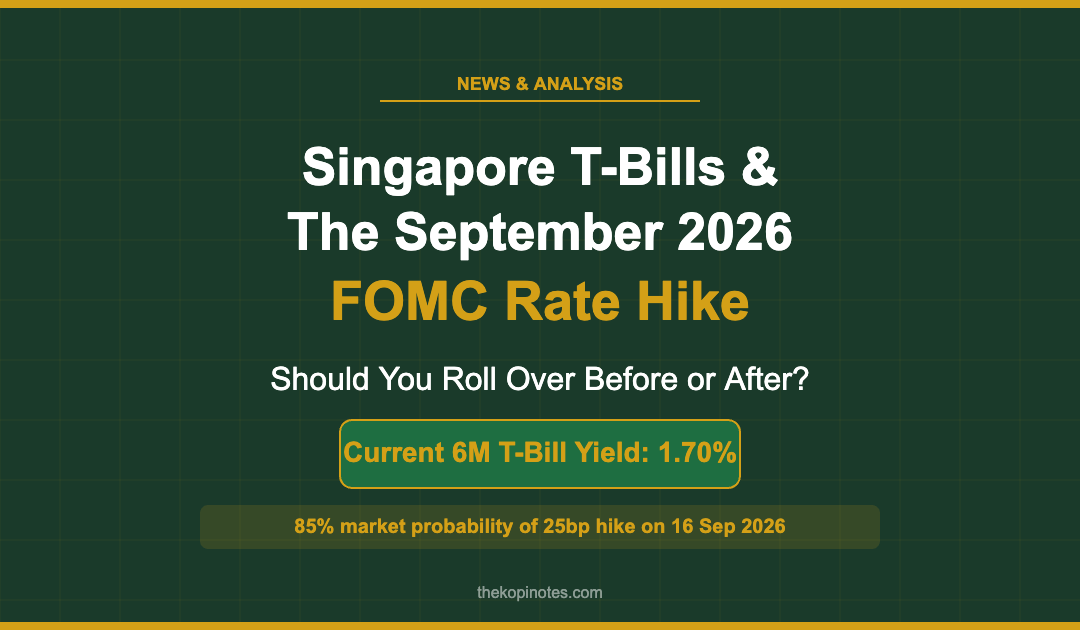
The September 2026 FOMC decision lands on 16 September, with markets pricing an 85% probability of a 25-basis-point rate hike that would push the Federal funds rate to 3.75%-4.00%. Singapore’s 6-month T-bill yield currently sits at 1.70% following the September 2026 auction. The core question for investors with maturing T-bills: roll over now at 1.70%, or wait 2-3 weeks and hope the next auction delivers a higher yield? This article lays out the data, the mechanics, and the decision framework.
Not financial advice. All figures are for educational reference only. Data as at September 2026 unless noted.
Table of Contents
1. What Is the FOMC Doing in September 2026?
2. Singapore T-Bill Yields: Where We Stand
3. How Fed Rate Hikes Affect Singapore T-Bills
4. Roll Over Before or After the FOMC Decision?
5. Alternatives to Consider Right Now
6. Frequently Asked Questions
1. What Is the FOMC Doing in September 2026?
The Federal Open Market Committee meets on 15-16 September 2026. A rate decision is expected on 16 September, and markets are pricing in a 25-basis-point hike with approximately 85% probability. This is driven by persistent energy-price pressures and the Fed’s stated willingness to keep inflation contained after holding rates steady in July.
If the hike materialises, the Federal funds rate will move from 3.50%-3.75% to 3.75%-4.00%. That would mark the second hike of 2026 and push the rate back toward multi-year highs.
| FOMC Date | Fed Funds Rate (Upper Bound) | Action |
|---|---|---|
| May 2026 | 3.75% | Hike +25bp |
| July 2026 | 3.75% | Hold (9-3 vote) |
| 16 Sep 2026 (expected) | 4.00% | Hike +25bp (85% probability) |
| Nov 2026 (TBC) | TBC | Data-dependent |
Source: CentralBank.Watch, September 2026. Market-implied probabilities as at 14 September 2026.
2. Singapore T-Bill Yields: Where We Stand
Singapore’s Monetary Authority issues 6-month T-bills roughly every two weeks. The cut-off yield at each auction reflects competitive bids from institutional and retail investors. It is influenced by SORA (Singapore Overnight Rate Average), which tracks US rate movements with a short lag.
Here is how Singapore T-bill yields have trended through mid-2026. For the full historical breakdown, see the Singapore T-bills 2026 guide.
| Period | 6M Cut-off Yield | Change |
|---|---|---|
| June 2026 | 1.40% p.a. | Base |
| August 2026 | 1.60% p.a. | +20bp |
| 1 Sep 2026 (BS26117A) | 1.60% p.a. | Flat |
| Latest (Sep 2026) | 1.70% p.a. | +10bp |
Source: MAS Auctions and Issuance Calendar, September 2026.
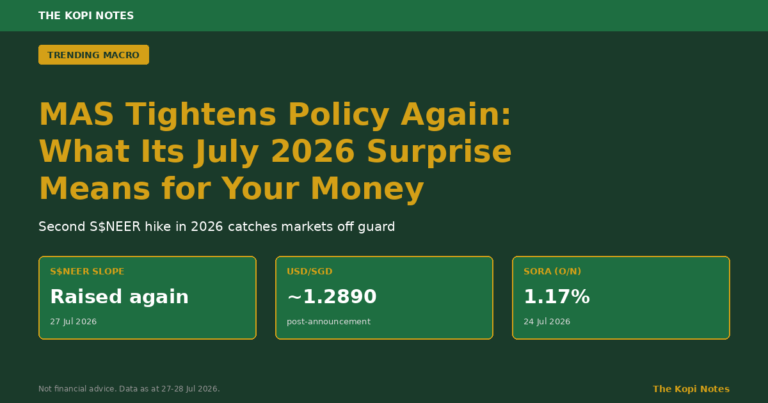
The trend shows a 30bp rise from 1.40% in June to 1.70% in September – a steady climb as markets priced in the expected rate hike. The pace of increases suggests the September FOMC outcome is already partially priced in.
3. How Fed Rate Hikes Affect Singapore T-Bills
Singapore T-bill yields do not move the moment the Fed announces a hike. There is typically a lag of 2-6 weeks before the impact shows up in auction cut-off yields. Three reasons explain this:
First, SORA adjusts within days of a Fed move, but T-bill auctions happen on a fixed schedule every two weeks. Second, competitive bidding dynamics mean institutional players price in expectations gradually rather than all at once. Third, the Singapore dollar and SORA relationship with the USD-denominated Fed funds rate introduces some currency transmission friction.
Historically, a 25bp Fed hike has translated to roughly a 10-20bp increase in Singapore 6-month T-bill yields over the subsequent 1-2 auctions. This is not a one-for-one pass-through.
Based on current trajectory, if the Fed hikes 25bp on 16 September, the next Singapore T-bill auction (likely late September or early October) could yield approximately 1.80%-1.90% — a potential gain of 10-20bp over the current 1.70%. For more on the September auction details, see our T-bill 2026 high auction guide.
4. Roll Over Before or After the FOMC Decision?
For investors with T-bills maturing around now, this is the practical question. Here is a decision matrix covering the three scenarios:
| Scenario | Your Action | Expected Outcome |
|---|---|---|
| Roll over NOW at 1.70% | Apply at next auction before 16 Sep | Locked in at 1.70% for 6 months. Miss any post-hike uplift. |
| Wait 2-3 weeks post-FOMC | Park cash temporarily (HYSA or money market) | Potentially earn 1.80%-1.90% at Oct auction if hike materialises. Lose 2-3 weeks of yield during gap. |
| Fed holds (15% probability) | Any action | No post-hike uplift. Rolling over now at 1.70% would have been the better choice. |
Estimated scenarios as at 14 September 2026. Not financial advice.
The maths on waiting: on a S$100,000 T-bill investment, the difference between 1.70% and 1.90% over 6 months is approximately S$100. The yield lost during a 2-3 week gap at 1.70% annualised is roughly S$65 on S$100,000. The net gain from waiting is approximately S$35 — but only if the next auction actually clears at 1.90% or higher.
For smaller positions (S$10,000-S$20,000), the absolute dollar difference is minimal and rolling over now is simpler. For larger positions (S$100,000 and above), waiting may be worth the minor inconvenience, particularly if you can park the gap-period cash in a high-yield savings account. The FSMOne referral code (P0544985) gives access to cash management options on the FSMOne platform.
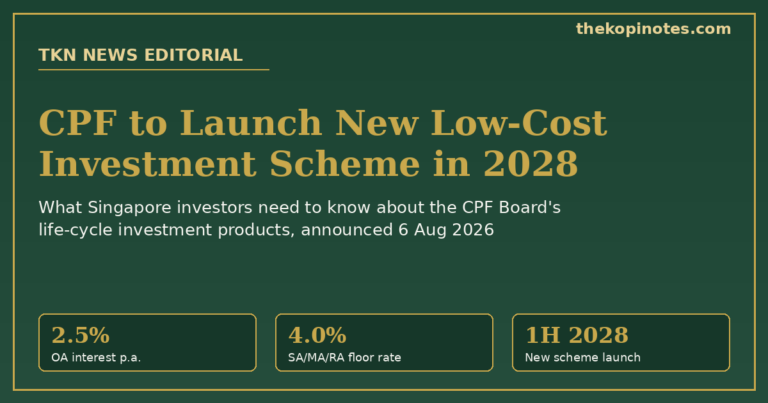
One important note: this analysis applies to T-bills held via individual CDP application. For CPF-OA holders investing in T-bills through CPFIS, the current 1.70% yield is below the CPF-OA default rate of 2.50% — making T-bills a less attractive use of CPF-OA funds at current levels regardless of FOMC timing.
5. Alternatives to Consider Right Now
Before committing to another T-bill round, compare the current short-term instrument landscape. The Singapore Savings Bonds guide covers SSBs in greater depth.
| Instrument | Current Yield | Liquidity | Key Consideration |
|---|---|---|---|
| 6M T-Bill (current) | 1.70% p.a. | No early exit | Fully government-backed; fixed 6-month horizon |
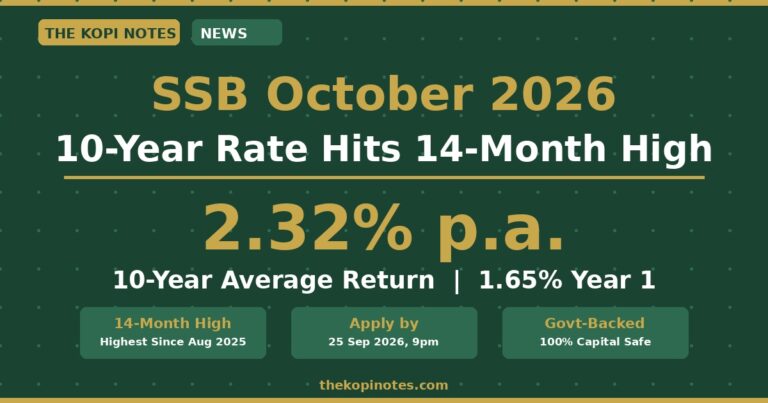
| SSB October 2026 | 2.32% (10-year avg) | Monthly redemption | Higher long-term yield; flexible redemption with no penalty |
| Fixed Deposit (major banks) | 1.30%-1.55% | Lock-in 3-12 months | SDIC-insured to S$100k; yield below T-bills |
| Syfe Cash+ Flexi | ~3.0%+ (variable) | No lock-in | Not capital-guaranteed; money market fund exposure |
Rates as at September 2026. Syfe Cash+ rate is indicative and variable. Sources: MAS, individual bank websites, Syfe website.
The SSB October 2026 issue stands out with a 2.32% 10-year average yield. The first-year SSB rate is lower than the average, but the monthly redemption flexibility makes it a strong option for money you do not need in the next 12 months but want access to without penalty.
For investors with a longer investment horizon looking beyond cash instruments, our analysis of best S-REITs in Singapore 2026 outlines higher-yielding options for those comfortable with property-backed risk. The Endowus referral code (2V343) gives access to institutional-grade bond and income funds for investors seeking yield above T-bill levels with managed risk.
6. Frequently Asked Questions
Will Singapore T-bill yields definitely rise if the Fed hikes on 16 September?
What happens if I miss the T-bill application deadline?
Can I apply for T-bills through CPF-OA?
Is the SSB a better option than T-bills right now?
Where do I apply for T-bills in Singapore?
Getting Your Cash Working Harder
Whether you roll over your T-bills now or wait for a post-FOMC bump, the key is keeping your cash deployed rather than sitting idle. The FOMC decision tomorrow will set the direction for Singapore short-term yields into Q4 2026.
Track our September 2026 T-bill yield update for the latest auction data as results come in post-FOMC.
This article was researched with the help of AI. While we strive to keep all information accurate and up to date, there may be errors. If you notice any discrepancies, please contact us.