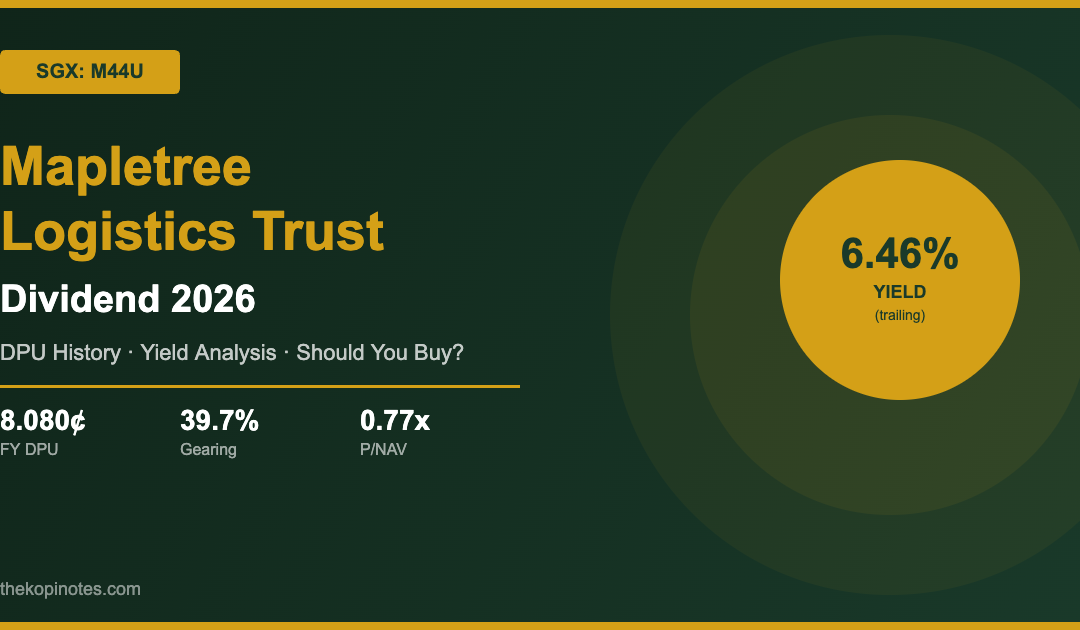
Mapletree Logistics Trust (MLT) Dividend 2026: DPU, Yield & Is M44U Still Worth Buying?
Updated April 2026 | SGX: M44U | Logistics & Industrial REIT | Semi-Annual Distribution
Mapletree Logistics Trust (SGX: M44U) is one of Asia’s largest and most geographically diversified logistics REITs, with a portfolio spanning Singapore, Hong Kong, China, Japan, Australia, South Korea, Vietnam and India. Backed by Temasek-linked sponsor Mapletree Investments, MLT has been a cornerstone dividend stock for Singapore retail investors since its listing in 2005.
In 2026, with SORA falling towards 1% and the logistics sector navigating post-pandemic demand normalisation, many investors are asking: Is Mapletree Logistics Trust still worth buying for its dividend yield? This deep-dive breaks down MLT’s FY2024/25 DPU, distribution history, financial health metrics, and how it stacks up against its S-REIT peers.
⚠️ Disclaimer: This article is for informational purposes only and does not constitute financial advice. All figures are based on publicly available data from SGX filings and MLT’s investor relations disclosures. Always conduct your own due diligence before making any investment decisions.
Table of Contents
Contents — Click to expand
1. What Is Mapletree Logistics Trust?
Mapletree Logistics Trust is Singapore’s first Asia-focused logistics REIT, listed on the SGX Mainboard on 28 July 2005. It is managed by Mapletree Logistics Trust Management Ltd, a wholly owned subsidiary of Mapletree Investments Pte Ltd — itself wholly owned by Temasek Holdings. This Temasek linkage provides MLT with one of the strongest sponsor pipelines among S-REITs, a key source of inorganic growth through right-of-first-refusal (ROFR) agreements.
As at the latest reporting period, MLT holds approximately 186 logistics and industrial properties across nine countries with a combined assets under management (AUM) of approximately S$14 billion. The portfolio spans modern warehouses, cold storage facilities, ramp-up logistics hubs and general industrial buildings — the backbone of modern e-commerce and supply chain networks across Asia Pacific.
Key MLT Fast Facts (FY2024/25):
| Metric | Value |
|---|---|
| SGX Ticker | M44U |
| Sector | Logistics / Industrial |
| Distribution Frequency | Semi-Annual (Apr & Oct) |
| No. of Properties | ~186 |
| Countries | 9 (SG, HK, CN, JP, AU, KR, VN, IN, MY) |
| AUM | ~S$14 billion |
| Portfolio Occupancy | ~95.9% |
| FY2024/25 Full-Year DPU | 8.080 cents |
| Distribution Yield (at S$1.25) | ~6.46% |
| Gearing Ratio | ~39.7% |
| NAV Per Unit | ~S$1.63 |
For Singapore investors building a diversified S-REIT portfolio, MLT’s logistics focus provides a meaningful counterweight to office and retail REITs — two sectors under heavier structural headwinds.
2. MLT DPU History & Distribution Yield 2026
Mapletree Logistics Trust distributes income to unitholders semi-annually — typically in April and October each year, covering the 6-month periods ending 30 September and 31 March respectively.
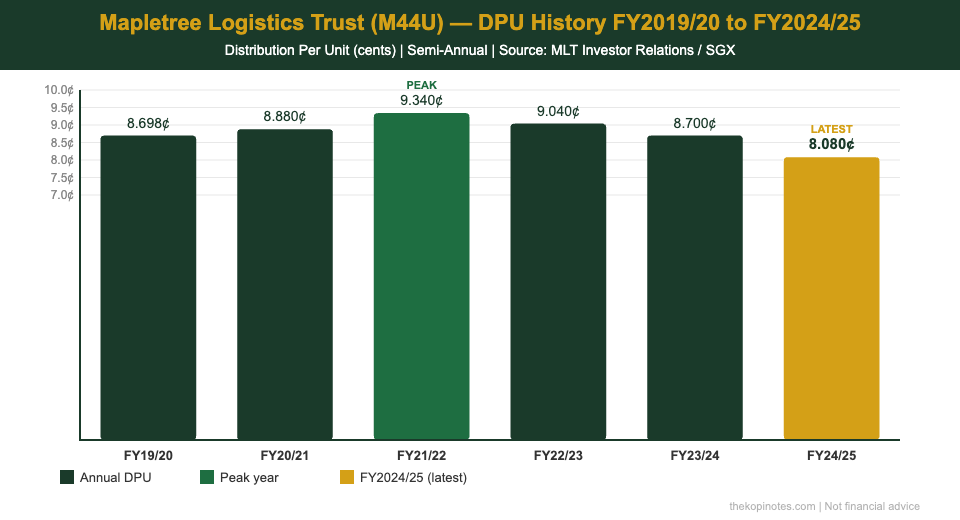
MLT’s DPU profile tells an important story: a period of strong growth from FY2019/20 through FY2021/22, followed by a gentle decline driven by rising interest costs, a weakening China portfolio, and a cautious capital recycling strategy. Here is the full six-year DPU history:
| Financial Year | 1H DPU (cents) | 2H DPU (cents) | Full-Year DPU (cents) | YoY Change |
|---|---|---|---|---|
| FY2019/20 | 4.300 | 4.398 | 8.698 | — |
| FY2020/21 | 4.413 | 4.467 | 8.880 | +2.1% |
| FY2021/22 | 4.617 | 4.723 | 9.340 | +5.2% ▲ Peak |
| FY2022/23 | 4.604 | 4.436 | 9.040 | -3.2% |
| FY2023/24 | 4.356 | 4.344 | 8.700 | -3.8% |
| FY2024/25 | 4.050 | 4.030 | 8.080 | -7.1% |
Source: MLT Investor Relations, SGX filings. FY ends 31 March annually.
The DPU decline from the FY2021/22 peak of 9.340 cents to 8.080 cents in FY2024/25 represents a cumulative 13.5% reduction — driven primarily by: (1) higher borrowing costs as interest rates spiked globally; (2) weaker contributions from the China portfolio amid softer logistics demand; and (3) a higher unit base following equity fundraising exercises.
What does this mean for yield? At MLT’s share price of approximately S$1.25 as at April 2026, the trailing DPU of 8.080 cents translates to a distribution yield of approximately 6.46%. For comparison, the Singapore 10-year government bond yield stands around 3.0–3.2%, giving MLT a yield spread of roughly 3.2–3.5 percentage points — an attractive premium for a Temasek-backed logistics REIT.
Investors using Syfe or Endowus to build a passive REIT income portfolio should note that MLT’s semi-annual payment schedule means income arrives in April and October — worth factoring into your cash flow planning.
3. S-REIT Peer Comparison: MLT vs Industrial & Logistics Peers (2026)
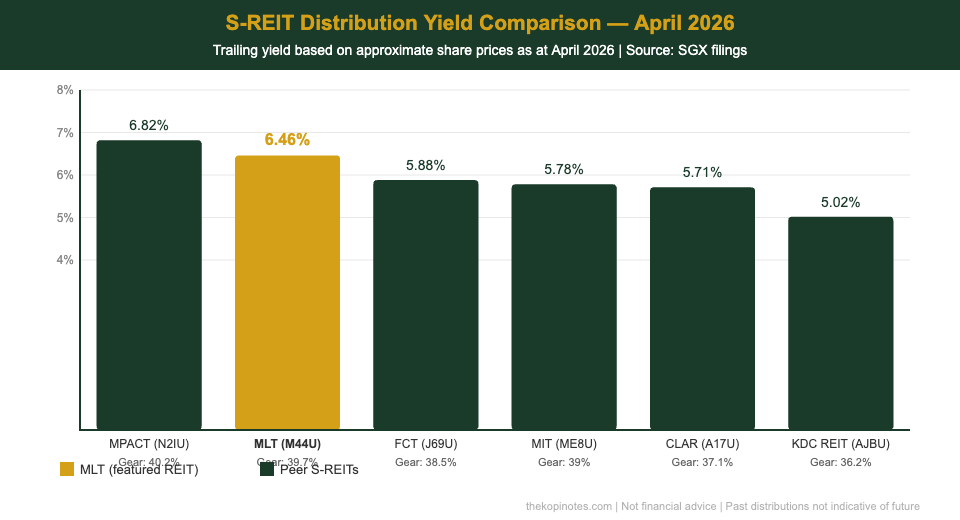
How does MLT stack up against comparable S-REITs? We compare Mapletree Logistics Trust against five peers across key metrics investors care about: DPU, yield, gearing and price-to-NAV.
| REIT | SGX Ticker | FY DPU (cents) | Yield (%) | Gearing (%) | P/NAV |
|---|---|---|---|---|---|
| Mapletree Logistics Trust ★ | M44U | 8.08 | 6.46% | 39.7% | 0.77x |
| Mapletree Industrial Trust | ME8U | 13.60 | 5.78% | 39.0% | 1.10x |
| CapitaLand Ascendas REIT | A17U | 15.03 | 5.71% | 37.1% | 0.95x |
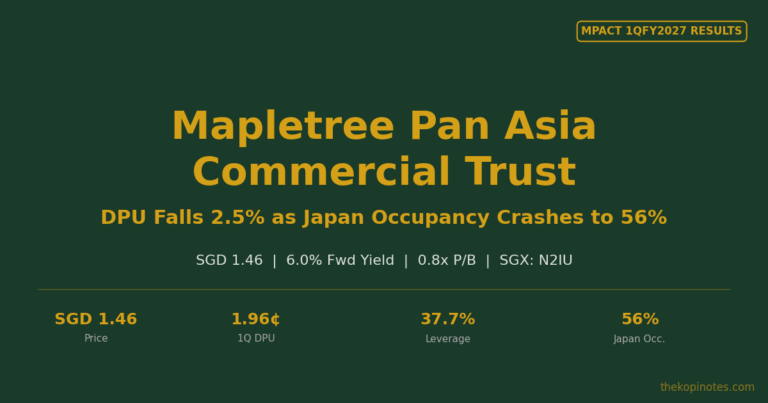
| Mapletree Pan Asia Commercial Trust | N2IU | 7.35 | 6.82% | 40.2% | 0.72x |
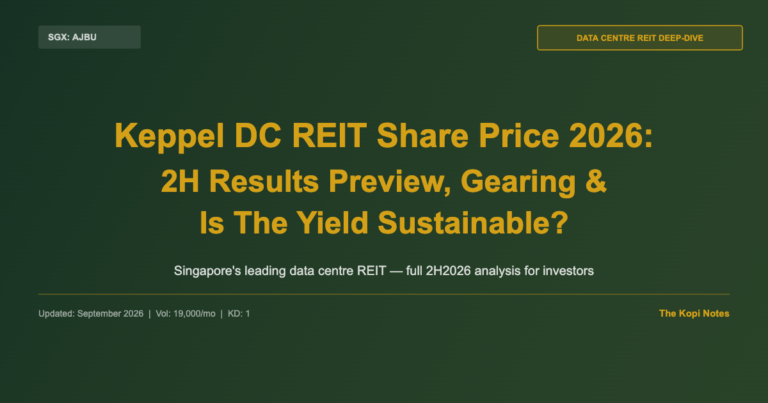
| Keppel DC REIT | AJBU | 9.58 | 5.02% | 36.2% | 1.30x |
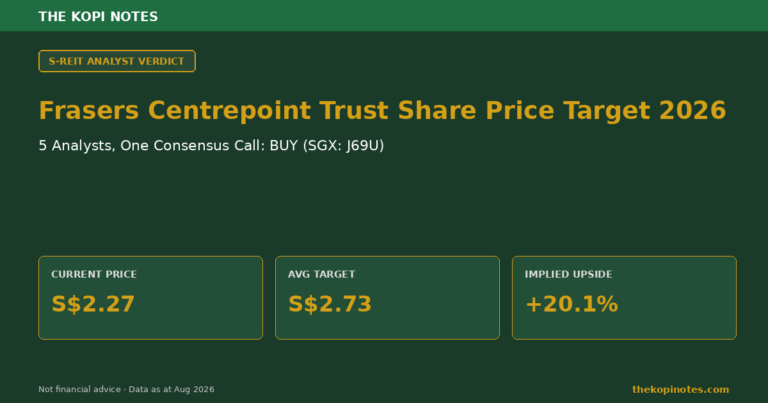
| Frasers Centrepoint Trust | J69U | 12.10 | 5.88% | 38.5% | 0.89x |
★ = Featured REIT. Yields calculated based on approximate share prices as at April 2026. All data from SGX filings and REIT investor relations pages. Past distributions are not indicative of future distributions.
MLT offers the second-highest yield in this peer group at 6.46%, behind only MPACT at 6.82%. However, MLT’s P/NAV of approximately 0.77x stands out as a value signal — unitholders are acquiring S$1.00 worth of logistics assets for just S$0.77. This discount to NAV reflects the market’s near-term caution on China logistics exposure, but also creates an asymmetric upside for patient income investors.
For a broader view of the S-REIT universe, see our Best S-REITs Singapore 2026 ranking which covers 15+ REITs across all sectors.
4. Financial Health: Gearing, ICR & NAV Analysis
For any S-REIT, three financial health metrics matter most: gearing ratio, interest coverage ratio (ICR), and net asset value (NAV) per unit. Here is how MLT performs on each.
Gearing Ratio: 39.7% — Comfortable Headroom
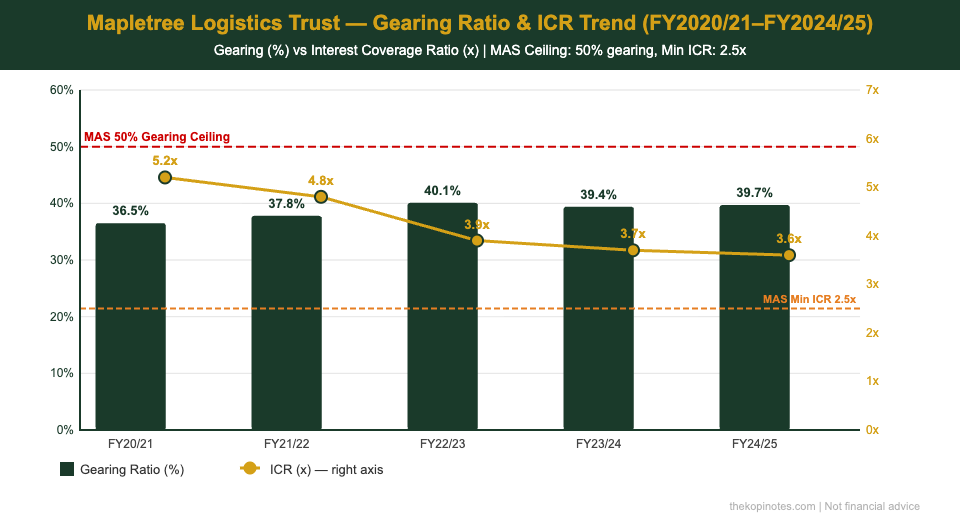
MLT’s aggregate leverage (gearing) stands at approximately 39.7% as at its latest reporting period. Under MAS Notice SFA04-N14 (the Property Fund Appendix), S-REITs face a statutory gearing ceiling of 50% — or up to 50% if the REIT maintains a minimum ICR of 2.5x. MLT sits comfortably below this limit with roughly 10 percentage points of headroom.
Translating this into dollars: at S$14 billion AUM and 39.7% gearing, MLT would need approximately S$1.4 billion of additional borrowings before approaching the MAS regulatory ceiling. This provides significant capacity for acquisitions or capital expenditure without triggering a rights issue.
Interest Coverage Ratio: ~3.6x
MLT’s interest coverage ratio (ICR) — net property income divided by interest expense — stands at approximately 3.6x. This is comfortably above MAS’s minimum 2.5x ICR requirement. With SORA now trending near 1.07% (as at early 2026, down from its 3.03% peak in mid-2023), MLT’s debt refinancing pipeline should deliver meaningful interest cost savings over the next 12–24 months.
Approximately 80% of MLT’s borrowings are on fixed rates, with a weighted average debt maturity of around 3.5 years. This hedging profile means near-term DPU is partially insulated from rate volatility, but also means the full benefit of SORA normalisation will accrue gradually as fixed-rate tranches mature and are refinanced at lower rates.
If you’re interested in how SORA movements affect S-REIT distributions more broadly, read our analysis: SORA Rate Singapore 2026: The S-REIT DPU Recovery Window.
NAV Per Unit: ~S$1.63 — Trading at 23% Discount
MLT’s net asset value per unit stands at approximately S$1.63. At a share price of S$1.25, MLT trades at a 23% discount to NAV (P/NAV of 0.77x). This discount is primarily a function of: (1) depressed investor sentiment towards China logistics assets (which represent roughly 25% of MLT’s AUM); and (2) the broader S-REIT sector de-rating from 2022–2024 as interest rates rose.
For investors with a 3–5 year horizon, a P/NAV below 1.0x historically represents an attractive entry point for quality S-REITs — though recovery depends on China logistics demand normalising and interest rates declining further.
| Financial Health Metric | MLT Value | MAS Limit / Benchmark | Assessment |
|---|---|---|---|
| Gearing Ratio | 39.7% | 50% (MAS ceiling) | ✅ Comfortable |
| Interest Coverage Ratio (ICR) | ~3.6x | ≥ 2.5x (MAS minimum) | ✅ Healthy |
| % Fixed Rate Debt | ~80% | — | ✅ Well-hedged |
| Weighted Avg Debt Maturity | ~3.5 years | — | ⚠️ Monitor refinancing |
| P/NAV | 0.77x | 1.0x = fair value | 📊 Value opportunity |
| Portfolio Occupancy | ~95.9% | — | ✅ Stable |
CPF investors considering using their Ordinary Account (OA) funds for S-REIT exposure should review our CPF investment strategy guide before committing — not all S-REITs are CPF-investible and OA limits apply.
5. Portfolio Overview: 9 Countries, ~186 Properties
One of MLT’s most distinctive characteristics is its geographic diversification across nine Asia-Pacific markets. This multi-market exposure reduces single-country risk but introduces foreign currency (FX) volatility and varying demand cycles across markets.
| Country | No. of Properties (approx.) | % of AUM (approx.) | 2026 Outlook |
|---|---|---|---|
| China | 50+ | ~25% | ⚠️ Cautious — oversupply concerns |
| Japan | 35+ | ~20% | ✅ Stable, FX hedged |
| Singapore | 25+ | ~17% | ✅ High demand, low supply |
| Australia | 20+ | ~12% | ✅ Strong e-commerce growth |
| South Korea | 15+ | ~10% | ✅ Stable |
| Hong Kong | 10+ | ~8% | ⚠️ Softer demand post-2023 |
| Vietnam / India / Malaysia | 20+ | ~8% | ✅ High growth potential |
Singapore’s domestic logistics portfolio continues to outperform, benefitting from near-zero vacancy rates and healthy positive rental reversions. Japan is a steady contributor with JPY FX hedging in place. The drag on MLT’s DPU in recent years has predominantly come from China, where a wave of new logistics supply has compressed occupancy and rental rates.
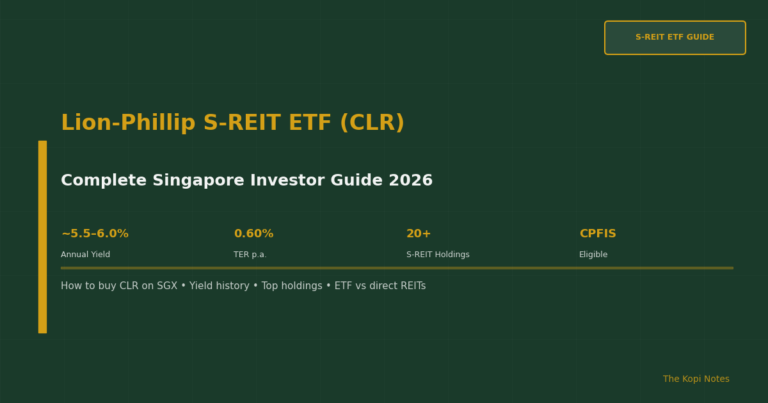
Management has actively been divesting lower-quality China assets and redeploying capital into higher-yielding markets (India, Vietnam), a portfolio repositioning strategy that should gradually improve distribution quality over time. For broader context on how to build a diversified dividend portfolio using S-REITs and ETFs, see our Singapore REIT ETF guide.
6. Key Risks to Watch in 2026
No investment is without risk. Here are the five most significant risks facing MLT unitholders in 2026:
1. China Logistics Oversupply
Approximately 25% of MLT’s AUM sits in mainland China, where a significant pipeline of new logistics supply has depressed occupancy rates and rental growth across tier-2 and tier-3 cities. Until this supply is absorbed — likely a 2–3 year process — China will remain a drag on overall DPU.
2. Foreign Currency (FX) Volatility
MLT’s income is earned across nine countries in CNY, JPY, AUD, KRW, HKD, VND and INR, then distributed in SGD. A weaker CNY or JPY (both of which have been volatile in 2025–2026) directly reduces the SGD value of overseas distributions. MLT hedges approximately 80% of distributable income on a rolling basis, but residual FX exposure remains.
3. Refinancing Risk
With approximately 3.5 years weighted average debt maturity, MLT has a meaningful tranche of debt maturing in the 2027–2028 window. If credit markets tighten (e.g. due to US recession or bank credit contraction), refinancing at elevated spreads could increase financing costs and compress DPU.
4. Equity Dilution Risk
MLT has historically relied on equity fundraising (placement + preferential offering) to partially fund acquisitions. While management has been more disciplined post-2022, any future large-scale acquisition could come with dilutive equity. Watch for capital markets announcements from the manager.
5. Geopolitical Risk (US-China Trade Tensions)
Escalating US-China tariffs and trade restrictions (as seen in the April 2026 tariff announcements) have the potential to disrupt cross-border logistics flows across Asia. MLT’s China-focused warehouses serving export manufacturers are especially exposed to any further decoupling of supply chains.
Investors may wish to pair MLT with more defensively positioned REITs (such as healthcare or suburban retail REITs) for balanced income exposure. Consider using platforms like FSMOne for cost-effective S-REIT unit trust access.
7. Frequently Asked Questions
What is the current dividend yield of Mapletree Logistics Trust (MLT) in 2026?
When does Mapletree Logistics Trust pay dividends?
Is Mapletree Logistics Trust's gearing ratio safe?
Can I use CPF to invest in Mapletree Logistics Trust?
Why has MLT's DPU been declining since 2021/22?
What is MLT's NAV and is it undervalued?
How does MLT compare to MIT (Mapletree Industrial Trust)?
8. Our Verdict: Should You Buy MLT in 2026?
Mapletree Logistics Trust sits at a genuinely interesting inflection point in 2026. The combination of a 6.46% distribution yield, a 23% discount to NAV, a Temasek-backed sponsor with a deep acquisition pipeline, and a gradually improving interest rate environment makes a compelling case for patient income investors.
The near-term headwinds are real — China logistics oversupply will take time to resolve, and DPU recovery depends on both lower refinancing costs and stabilising occupancy in the mainland portfolio. But for investors with a 3–5 year time horizon, buying a best-in-class logistics REIT at 0.77x NAV with a sub-40% gearing ratio is a risk-reward profile that has historically rewarded discipline.
The Kopi Notes view: MLT is a HOLD to gradual accumulate at current prices for income-focused investors already comfortable with S-REIT exposure. We would be more aggressive buyers if the share price dips towards S$1.15–1.20 (implying a yield of ~6.8–7.0%). New investors should size positions conservatively and monitor China portfolio updates in each semi-annual results release.
This is not financial advice. All investment decisions carry risk. Please conduct your own due diligence.
9. References
- Mapletree Logistics Trust — Investor Relations
- SGX: M44U — Mapletree Logistics Trust Stock Page
- MAS Property Fund Appendix — Gearing & ICR Requirements
The Kopi Notes is a Singapore-based investment blog focused on S-REITs, dividend investing and retirement planning. All content is for educational purposes only and does not constitute financial advice. Always consult a licensed financial adviser before making investment decisions.
This article was researched with the help of AI. While we strive to keep all information accurate and up to date, there may be errors. If you notice any discrepancies, please contact us.